

Last Updated on June 9, 2026
This post contains some affiliate links. If you make a purchase through these links, I receive a small commission at NO EXTRA COST TO YOU.
Portugal is one of my favorite European countries, one that I find myself returning to over and over again. There are many reasons for that. Portugal is a great combination of history, culture and stunning landscapes. Despite its rather small size, it’s very diverse and easy to explore with or without a car. On top of that, it’s a great value, especially compared with other European destinations. In this 10 days in Portugal itinerary, I’ll show you how to see some of the best places in the country.
A road trip is a very popular way to explore Portugal and you can certainly do it that way. But if you don’t want to rent a car and don’t like the idea of driving in Portugal, you can absolutely get around by train instead. The train system in Portugal is good, really cheap and very easy to use.
Because the country is not too big and many places are relatively close together and well connected by trains, you can see a lot in just 10 days in Portugal. I put together this itinerary after a couple of trips to Portugal, where I visited Porto and Lisbon, and took several day trips from each city. All that without a car.

10 days in Portugal – from Lisbon and Porto
For this 10 day Portugal itinerary, I chose two home bases: Lisbon and Porto. Both cities have plenty to do and you need at least 2 – 3 days in each to see all the highlights without rushing. In addition, from both Lisbon and Porto, you have lots of opportunities for day trips to show you a whole different side of Portugal. All of them are no more than two hours away, which makes it possible to visit in a day and return to your home base.
One region that is missing from my Portugal itinerary is Algarve, the popular beach destination on the southern coast. While technically you could try to add a day there, from the practical point of view, that would be too much for 10 days. Not to mention, just a tease of this beautiful region, that definitely deserves a separate visit.

10 days in Portugal itinerary
The entire itinerary is centered around two biggest cities: Lisbon and Porto. 10 days in Portugal starts in Lisbon, then moves on to Porto, but the order can easily be reversed. Generally you can find cheaper flights to Lisbon, that’s why I chose it as the starting point, but feel free to fly to Porto, if you find better airfares.
Both Lisbon and Porto have plenty to do and see, and with 3 days in each city, you get to cover most of it. I’m not a fan of rushing through a destination, just to check off the attractions, so my Portugal itinerary lets you see all the highlights with ample time for down time.
Day 1 – Arrive in Lisbon
Lisbon is Portugal’s capital and one of the sunniest cities in Europe. It’s also insanely hilly, so be prepared for lots of climbing.
When you arrive in Lisbon, you have several ways to get from the airport to the city center. Metro is one of the cheapest and fastest options, with the Red Line (Linha Vermelha) leaving directly from the airport. You can also pre-book a private transfer (especially if you are with a big group and lots of luggage). use a taxi, ride share services or a public bus (Carris network).
Praça do Comércio
Praça do Comércio, a large square in the waterfront, is the perfect introduction to Lisbon. It’s large, open and even though very popular, it never really feels too crowded. The waterfront is also a great place to hang out and see the sunset while listening to street performers.
Some people still refer to Praça do Comércio as the Royal Square (Terreiro do Paço), as it was the location of the Royal Palace, until it got destroyed by the earthquake of 1755. To celebrate Lisbon’s reconstruction, Rua Augusta Arch was built, which now serves as an entrance. You can also climb to the top of it for some great panoramic views of the square, Tagus River and Baxia neighborhood.

Walk Rua de Augusta
When you walk through the Arch, you’ll find yourself on Rua de Augusta, the most touristy street in Lisbon. This pedestrian street is lined with shops and restaurants, and even though you might be tempted to stop at one of them, you may want to save your appetite for some of the better restaurants in Lisbon.
Most of these places are way overpriced and mediocre at best, and you can find a much better meal elsewhere.

Where to stay in Lisbon
Some of the best neighborhoods to stay in Lisbon are Baxia (Downtown), Chiado and Alfama. They are all a bit different, but have one thing in common and that is a central location to many of Lisbon’s attractions. Here are a few good hotel choices:
- Hotel do Chiado – this beautiful hotel is right in the middle of Chiado/ Baxia district. The rooms with balconies or terraces have spectacular views of the city and São Jorge castle.
- Figueira by the Beautique Hotels – a beautiful, boutique hotel in very central location in Baxia.
- Lisboa Carmo – a charming, cozy hotel in Chiado, just a short walk away from many Lisbon attractions.
- Memmo Alfama Hotel – this boutique hotel is located in the heart of Alfama, just steps away from the São Jorge Castle. From the roof top terrace, you can enjoy some of the best views of the city and Tagus River.
Day 2 – Lisbon – Alfama
The second day in Lisbon is centered around exploring my favorite neighborhood in the city, Alfama. It’s the oldest, most authentic and picturesque area in the city. It’s also the only district of Lisbon, that got spared during the earthquake of 1755.
São Jorge Castle
Start your day with a visit to Castello de São Jorge, a Moorish castle, one of the biggest attractions in Lisbon. The castle itself is just okay, in my opinion, especially compared to other European castles. It’s mostly just walls and courtyards. However, the castle sits up on one of the highest hills, so you get spectacular views of Lisbon and Tagus River, which to be honest, was the highlight of the visit for me.
The views and the beautiful peacocks, that roam the castle grounds.
As one of the biggest tourist attraction in Lisbon, São Jorge Castle does get crowded, especially in high season. You can always prebook your tickets online, which will let you skip the line, or plan to be there first thing in the morning.


Get lost in the streets of Alfama
Some places are made for exploring without a map and Alfama is the classic example of that. The oldest district of Lisbon is made up by narrow, cobble stone streets and colorful buildings.
As picturesque as it is, Alfama is far from picture perfect. On many buildings, the paint is peeling and tiles are chipped, but that is actually its main appeal. Even though Alfama is very popular with tourists, it did manage to retain its authenticity and old neighborhood charm.


Visit Fado Museum
Fado is a traditional Portuguese music, that’s very melancholic and emotional. You can find Fado clubs in many places in Portugal, but it actually originated in Alfama. If you’re not familiar with this style of music and you plan on seeing a Fado show in Lisbon, you might enjoy visiting Fado museum first.
The museum in pretty small and one hour is probably all you need. It does a great job of showing the history and evolution of Fado, with a help of various exhibits. It’s well worth the €5 admission, and a great way to familiarize yourself with the style.
Fado Museum is closed on Mondays!


Miradouros
In a place as hilly as Lisbon, you are guaranteed to find many scenic viewpoints overlooking the city. Lisbon has a lot of so called miradouros, and some of the best ones are near Alfama.
- Miradouro das Portas do Sol – it’s one of the most popular viewpoints in Lisbon and for a good reason. There is a restaurant with a terrace there, if you want to have a meal with a view.
- Miradouro de Santa Luzia – another great viewpoint, right next to Portas do Sol. It offers amazing views of Alfama.
- Miradouro da Graça – not far from the São Jorge Castle. Great spot for sunset.
- Miradouro da Senhora de Monte – this viewpoint is perched up on a hill and offers great panoramic views of the city.

Day 3 – Day trip to Sintra & Cabo da Roca
There are a few days trips from Lisbon you can take, if you want to explore beyond the city, and Sintra is the most popular one. It’s a picturesque, mountainous town, with castles, fairy tale like Palaces and a small town charm. This is one of those must see places in Portugal, BUT it does get insanely crowded, so it’s important to head there early in the morning.
You can either take an organized tour or visit Sintra on your own, which is very easy to do. Direct trains run daily from Lisbon’s Rossio train station and once in Sintra, the tourist bus 434 runs between the major attractions. The ticket costs €13.50, it’s valid for 24 hours and you can hop-on and off as much as you’d like during that time.
There is a lot to see in Sintra and one day is long enough to see some of the attractions, but not all of them, unless you rush between them. They are spread out and getting between them will take up some of your time as well.
- Pena Palace – the colorful Palace, that could easily be taken out of a fairy tale, is Sintra’s most popular attraction. It’s the 2nd stop on the 434 bus, but I recommend heading there first. This way, you will arrive right when it opens and beat the biggest crowds.
- The Castle of the Moors – after visiting Pena Palace, you can either hop on the 434 bus or walk to the Moorish castle. Even though there are mostly walls left, it’s worth visiting for the amazing views of Sintra from the very top. The climb is not for the faint of heart, but totally worth it.
- Town of Sintra – it’s time to get back on the 434 bus to head down to the town of Sintra. Even though it’s not very big, it sure is very charming and picturesque. There are a few cafes and restaurants, so it’s a great place to stop for lunch before heading to the next attraction.
- National Palace of Sintra – the exterior of the Palace might not be as eye catching as Pena Palace, but the beautiful interior sure compensates for it.
- Quinta de Regaleira – this UNESCO recognized private estate is just a short walk from Sintra town. It’s described by many as the most enchanting place in Sintra. Besides the impressive 5 floor house, you have beautiful gardens, tunnels and the Initiation well.
To make the most out of your one day in Sintra, I recommend arriving before 9 am, so you can be on the first 434 tourist bus (which leaves shortly before 9 am). Also, choose the places you want to see the most and focus on them, instead of trying to cover everything.
For more tips and a detailed guide on taking a day trip to Sintra, read One day in Sintra, Portugal – a perfect day trip from Lisbon


While in Sintra, you are not far from Cabo da Roca, the westernmost point in mainland Europe. It’s a beautiful spot with amazing views of the cliffs and the ocean. If you’d like to add a quick visit there, there is a direct bus 1253 (which recently replaced the 403 bus), that runs from Sintra with a stop directly in front of Cabo da Roca.
I was really happy I took that side trip to Cabo da Roca, but of course that will cut your time in Sintra even shorter.
Just for the reference: I arrived in Sintra before 9 am and was able to cover Pena Palace and gardens, Castle of the Moors, National Palace, and had lunch in town before taking a bus to Cabo da Roca around 3 pm.
For more details on that and how to get back to Lisbon, read Sintra to Cabo da Roca – how to visit on your own.

Day 4 – Lisbon/Belém
Today it’s the last full day in Lisbon and it’s time to explore Belém, another great neighborhood, that is home to a few of Lisbon’s biggest attractions. Belém also has a much different vibe than the rest of Lisbon, feels much more open and spacious than places like let’s say Alfama.
Belém is about 9 km west of the city and you can get there by taking the 15E Tram from Praça do Comércio (tram that goes towards Jardim de Algés). Get off at Mosteiro dos Jerónimos stop, which is right in front of the Monastery. All the major sights of Belém are in that area and within a walking distance.
If you’d like a more guided tour of Belém, you can also book a small walking tour like this one.
Mosteiro dos Jerónimos
I recommend starting your day in Belém with a visit to Mosteiro dos Jerónimos. This massive Monastery dates back to the 16th century, it’s the one of the biggest landmarks in Lisbon and a UNESCO World Heritage site.
It used to serve as a house of prayer for the men going out to sea. Also, many Portuguese Royals are buried there, as well as the famous explorer Vasco da Gama. His tomb can be seen in the Chapel, that is free to visit. To see the rest of the Monastery, there’s an entrance fee of €18.
Torre de Belém
Right on the Tagus river sits Belém Tower, one of the two UNESCO World Heritage Sites in Lisbon, as well as one of the Seven Wonders of Portugal. Back in the day, its main role was to protect the city from the attacks coming from the water.
Belém Tower is quite an incredible building; one you definitely need to see while in Lisbon. You can also step inside of the tower, but to be honest, it’s not worth the €6. Even the views from the roof top terrace are nothing special, especially compared to those from Lisbon’s Miradouros.
2026 UPDATE: Belém Tower is currently under renovation, which is expected to last until mid 2026. The outside is no longer covered in scaffolding, but you can’t go inside the tower.
Padrão dos Descobrimentos
Just a short walk away from Torre de Belém stands another one of Belém’s landmarks: Monument to the Discoveries. It commemorates all the important historical figures and Portuguese explorers, of which there were many.


Pasteis de Belém
By now you probably had your share of Pastel de Natas. But you can’t miss trying one from Pasteis de Belém, the historic cafe where the famous Portuguese pastry was first created in 1837. The same secret recipe is still used today and trying one of the Pasteis de Belém is a must while in Lisbon.
This, of course, means, there’s usually a long line to get in, but it moves fast.
Take a Sunset cruise
If you’d like to extend your Belém visit into the evening, you might enjoy a 2 hour sunset sailing cruise. It’s a great way to end the day and see Lisbon’s landmarks from the water perspective.
You can book the 2 hour Sunset sailing cruise here.

For a more detailed guide to Lisbon, read 3 days in Lisbon – best things to do on your first visit
Day 5 – Train from Lisbon to Porto
After exploring Portugal’s capital, it’s time to move on to Porto, the second biggest city in the country. While Porto shares many similarities with Lisbon, it definitely has a more of an old city feel.
Lisbon and Porto are 310 km (192 miles) apart and you can easily travel between both by train. The train ride takes between 2.5 – 3.5 hours, depending on whether you choose the Express (Alfa Pendular) or Intercity train (Intercidades).
In Lisbon most trains leave from Santa Apolonia station and arrive in Porto’s Campanhã station. Some trains also stop at São Bento, which is a station in the center of Porto, but the Express trains do not! If you arrive in Porto on the Express train, you can take a short,10 minute train ride from Campanhã to São Bento, which is included in your ticket price. Here’s the detailed train schedule and fares.
If you are traveling in high season, I recommend pre-booking your train ticket. This will also save you money, as tickets get more expensive closer to your departure date.
São Bento train station
The first of Porto attractions awaits you the moment you step off the train. The beautiful São Bento station, covered in over 20,000 azulejos, is considered to be one of the most beautiful train stations in Europe. Even though it might seem strange to include a train station on the list of top things to do in Porto, it’s a place you can’t miss.

Cais de Riberia
The UNESCO recognized Riberia is the oldest neighborhood in the city and a must visit during your time in Porto. Once you get settled in your hotel, head down to Cais de Riberia, which is the waterfront promenade. This is the most beautiful part of Porto, and also where all the action is, both day and night. The waterfront is lined with colorful buildings, lots of restaurants and outdoor cafes. Since it’s the most touristy part of Porto, prices are higher than elsewhere, but it’s definitely worth stopping for a drink.


Take a 6 bridges boat tour
6 bridges bout tour is one of the most popular things to do in Porto, and while yes, very touristy, it’s a nice way to spend one hour on the water. During the ride you go down Douro River under all six bridges and get a closer look at them. Also, it’s fun to see Porto from the water.
Most 6 bridges boat tours leave from Cais de Riberia and you’ll find kiosks selling tickets right along the waterfront. If you don’t have a specific time in mind, you can just show up and get a ticket for the next departure, which is usually every hour. If you are a planner, you can also pre-book it here.

Where to stay in Porto
Porto is a pretty compact city, and although hilly, it’s very walkable. If you stay in one of the central areas, you’ll be able to get to most places on foot. Here are a few great hotels in Porto to choose from:
Day 6 – Porto
Llevaria Lello
Whether you’re a Harry Potter fan or simply enjoy visiting beautiful book stores, Llevaria Lello is most likely on your Porto itinerary. Supposedly, J.K Rowling, used to frequent the book store while living in Porto, and was inspired by it. Once that became common knowledge, Llevaria Lello turned into a major tourist attraction.
Since a lot of people went there only to take a picture on the beautiful staircase, the bookstore started charging an admission fee (currently €12), which goes towards a book purchase. They also offer a more expensive ticket (Ticket Gold), which lets you through a special line and includes a book from Livraria Lello Collection. Tickets have a timed entry and you can book it here prior to your visit.
This is a really beautiful bookstore, but it’s also one of the most popular places to visit in Porto, which means it gets very crowded. It’s worth seeing, just go with the right expectations.

Climb Clérgios Tower
Clérgios church is just a short walk away from Llevaria Lello, so it makes perfect sense to walk over there after your bookstore visit. You can visit the church for free, but the real highlight is the tower that offers some of the best views of Porto. There is a €10 to climb Clérgios Tower, but it’s well worth the price.
The price and the climb. At 249 ft tall (76 m), this is the tallest monument in the city and there are about 240 steps you need to take to get to the top, before you can enjoy the view. Again, absolutely worth adding to your Porto itinerary.


Try Francesinha at Café Santiago
Out of all the traditional dishes to try in Porto, Francesinha is definitely the most iconic. The monster sandwich is often referred to as “heart attack on a plate” and here’s why. It’s made out of bread, ham, bologna, fresh sausage, red sausage, beef steak and covered with cheese and beer sauce.
To say it’s very filling would be an understatement. Be sure to go hungry!
You can try Francesinha at many restaurants, but Café Santiago is one that is always recommended as the best place. It’s a small, casual cafe and always full of both tourists and locals. You might have to wait in line to get in, but it’s worth it. They also have some seats at the bar, if you don’t need or want to wait for the table.

Visit some of Porto’s churches
Porto is home to many beautiful churches and you might want to pick a couple to visit.
- Sé Cathedral – built between 12-13th century, it’s one of the oldest buildings in Porto. The Cathedral is free to visit, but there’s a €3 fee to get access to the Cloisters.
- Capela das Almas – with its exterior entirely covered in blue and white azulejos, Capela das Almas is one of the most beautiful churches of Porto. It’s located right on the busy Rua de Santa Catarina street and impossible to miss. Free to visit,
- Igreja de Santo Ildefonso – another church with its exterior beautifully decorated with azulejos. It’s located in Praça da Batalha, not far from São Bento train station. Fun fact: the same artist worked on both the church and the train station.
- Igreja de São Francisco – a Gothic church Gothic with a €9 fee to enter.


Day 7- Day trip to Douro Valley
What I love about Porto is that there are some many great day trips you can take, and they all offer something completely different. All places are no more than 2 hours away, so it’s very easy to visit in one day.
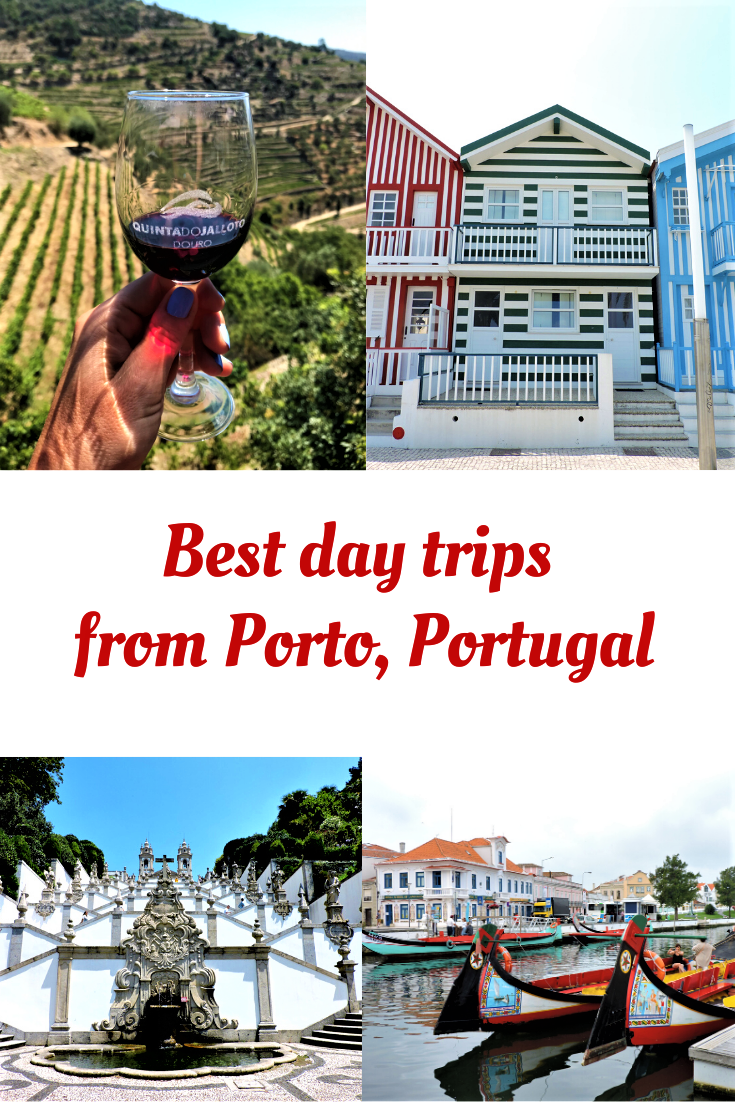
One of the absolute best day trips from Porto is Douro Valley, a spectacular wine region, famous for Port wine production. With this particular 10 days in Portugal itinerary, you have time for couple of places outside of Porto, but if I could only visit one, Douro Valley would be it. This is such a beautiful region and the landscape is truly breathtaking. Even if you are not a wine drinker, I’d still recommend going just for the views.
You could easily spend a few days exploring it, but a day trip from Porto is doable as well. While you can get to Douro Valley by train, I don’t really recommend it. The train ride back and forth will take up half the day, leaving little time to explore.
If one day is all you have, the best way to visit Douro Valley from Porto, in my opinion, is on an all day tour. The tours include transportation, visits and Port tasting at a couple of estates, lunch and a 1 hour cruise on Douro Valley. It’s a long day, but totally worth it. I went with Cool Oporto and can’t recommend them enough. They keep the number of people to 8 max, so make sure to book in advance, especially if you visit in high season. You can book the Douro Valley tour here. I guarantee I will be one of the highlights of your 10 days in Portugal.
To learn more about the trip I took, read Exploring the spectacular Douro Valley in Portugal


Day 8 – Porto
Visit Palacio da Bolsa
Palacio da Bolsa is a former Stock Exchange and the finest example of Neoclassical style. While you probably won’t be too impressed with the exterior, wait till you step inside. All of the rooms are beautiful with stunning details, but it’s the Arab room, that is the highlight. It’s said to be inspired by the Alhambra in Granada, which is quite apparent when you look at the Moorish style in which it’s decorated.
The reason I chose Palacio da Bolsa as the first activity of the day, is that it can only be visited on a 30-minute guided tour (€14). You can book your tour online for the chosen day, but time of the tour will be made at the ticket office. It does get crowded later in the day and spots fill up quickly, so you might have to wait a while for your spot.

Church of São Francisco
Right next to Palacio da Bolsa is church of São Francisco, one of the many churches in Porto. This one is worth checking out for the Baroque inside decoration. The entrance costs €7,50.
Take the tram 1 to Foz de Douro
The historic Tram 1 is sort of Porto’s version of Tram 28 in Lisbon, although not as crowded. It’s one of the 3 historic trams, that’s still in use and the most popular one. Mostly due to the scenic route along Douro river, as it makes its way from the São Francisco church to Foz de Douro.
Even though the crowds are nowhere near the ones lining up for Tram 28, there is usually a good number of tourists. The Tram 1 is also much smaller and fills up fast. As always, it’s best to catch it at the first stop, which happens to be conveniently located right at the bottom of São Francisco church.
A one-way ride on the Tram 1 costs €6 paid directly to the driver (either cash or credit card). The round trip ticket for the same costs €8, so you might as well get it to save some money. Your Andante card is not accepted for this ride.
Explore Foz de Douro
The 20 minute ride on Tram 1 will bring you to Foz de Douro, considered to be the most exclusive part of Porto. You’ll notice how it’s definitely different and much quieter than the busy historic district. Foz de Douro is perfect if you want a little break from the hustle and bustle of the rest of the city.
Foz de Douro is also where Douro River meets Atlantic ocean, which often creates quite a dramatic background. You can take a walk down the esplanade, check out the Felgueiras lighthouse and stop at one of the beach bars for a snack or a drink.

Take a ferry to Afurada
If you are up for exploring a lesser know part of Porto, that has not been discovered by tourists yet, head over to Afurada. It’s a sleepy fishing village, that seems like it’s world’s away from the rest of the city.
To get to Afurada, you need to take a ferry Flor de Gas (for €2 one way) across the river. To get to the ferry, you can either start walking back along the river towards historic Porto (about 20 min walk) or hop on Tram 1 going towards Infante and get off at Gás.
UPDATE: Sadly, Flor de Gas ferry stopped running in 2020 and never resumed its service. You can still get to Afurada by taking an Uber/Taxi or walk/bike along the river on the Gaia side.

Day 9 – Porto and Vila Nova de Gaia
Walk across Louis I Bridge
Out of all 6 bridges in Porto, Louis I bridge is the most iconic and recognizable one. If you see a resemblance to Eiffel Tower, this is not accidental. The bridge was built by one of Eiffel’s students. Louis I Bridge connects Porto with Vila Nova de Gaia, which is mostly known as the home to many wine lodges.
One of the fun things to do in Porto is walk across the bridge, not only to get to the other side, but to also enjoy incredible views of both Vila Nova de Gaia and Porto. The bridge has two levels and both are accessible to pedestrians, and only the lower deck has road traffic.
This is also a great spot to get some night views of Porto, when the city is all lit up.


Explore Vila Nova de Gaia
Once you cross Luís I Bridge, you are in Vila Nova de Gaia, which is not as many people assume part of Porto, but its own separate city. Vila Nova de Gaia is best known for wine cellars, where the Port wine produced in Douro Valley is brought for aging and storage.
But before you head to one of the wine loges for Port tasting, be sure to spend some time exploring the area, especially the waterfront. This is where you get that postcard view of Porto, with the colorful Cais da Riberia and the city’s hills right across the river.

Visit one of the wine caves
Port wine, that is produced in Douro Valley, eventually makes its way to Vila Nova de Gaia. That’s where the port lodges are, where the wine ages and gets stored. Today, a lot of them offer tours and tastings, and you can choose from independent to more guided ones, depending on your preference.
- Taylor’s – if you prefer a more independent tour, you’ll enjoy visiting Taylor’s. They offer self guided tour, that ends with a tasting of 2 Port wines in a beautiful garden like setting.
- Graham’s – offers guided tours, that need to be reserved in advance.
- Cálem – right on the waterfront promenade, this wine lodge offers guided tours.

Day 10 – Option 1- Day trip to Aveiro & Costa Nova
As I mentioned before, there are quite a few great day trips you can take from Porto. 10 days in Portugal is not long enough to do it all, so you will have to make some choices.
On your last day in Porto, one of my suggestions is taking a day trip to Aveiro, a small fishing town, about one hour away by train. It’s mostly known for its canals and the colorful Moliceiros boats. Which is why it’s often referred to as “Venice of Portugal”.
You can catch the train from either São Bento or Campanhã station and they are very frequent (you can check the timetable here). Tickets are €3.95 one way and the train takes a little over one hour. Be sure you take the direct Urban train, as there are some that require a change and are more expensive. Once you are in Aveiro, you are just a 10 minute walk away from the city center.
One of the things you definitely do on your Aveiro day trip is to take the canal boat tour on one of the traditional Moliceiros boats. Back in the day those colorful boats were used to harvest seaweed, which was one of the main industries. Today they are a tourist attraction and are used for taking people up and down the canals.
It’s a great way to spend an hour or so on the water. Once you are in the center of Aveiro, you’ll see the boats along the canal and you can book a ride on the spot. They run very frequently, so you can join the next available ride. Or if you are visiting in the summer, when it’s much busier and there are often lines, you can book your Aveiro canal boat tour online in advance.


Aveiro is also known for its Art Noveau architecture, and you can see some of the houses along the the main canal. If you are up for trying something local, stop at one of the cafes for some coffee and Ovo Mole. It’s a small sweet snack, made with just two ingredients (egg yolk and sugar) and it’s Aveiro’s specialty.


Aveiro is pretty small and you don’t really need a full day to see the whole city. You can easily combine Aveiro with a visit to Costa Nova, just a short bus ride away.
Costa Nova is a small coastal village best known for rows of colorful striped houses. Those houses used to be storage sheds for the fishermen and they painted them different bright colors to help identify them. Today a lot of them are guest houses and holiday rentals.
The striped houses became quite popular on social media and are now one of the most photographed places in Portugal.
Once you get your classic Costa Nova photos, you can take a walk along the beach promenade, enjoy the ocean views, maybe stop for a bite to eat at one of the cafes. Being on the Atlantic Ocean, you can get some fresh seafood at one of the local restaurants.
The best way to get from Aveiro to Costa Nova is by bus. You can catch it at either Aveiro’s bus station (which is right next to the train station) or the city center. It takes about 20-30 minutes to get there and you’ll know you’re there when you see the row of striped houses.


For more information on how to spend a day in Aveiro and Costa Nova, read Aveiro – the “Venice” of Portugal in one day.
Day 10 – Option 2 – Day trip to Braga
Another option for your last day in Porto is a day trip to Braga, which is a completely different taste of Northern Portugal. Just like Aveiro, Braga is easy to get to by taking an urban train from São Bento station. The journey takes a little over an hour and costs €2-6 (depending on the time and day of the week). Once you reach Braga, the city center is just a short 5-minute walk from the train station.
Braga is the 3rd largest city in Portugal, which came to me as a surprise, because it has a very small town feel. Braga is regarded as the religious center of the country and this is very apparent, as you start walking around the city. Seems like there’s a church every way you turn and there are in fact more than 30 of them. While it’s virtually impossible to visit them all on a day trip from Porto, the ancient Sé Catedral is definitely worth a stop.


While there are many charming spots in the city, the biggest highlight and the main reason many visit Braga is Bom Jesus do Monte. The UNESCO recognized sanctuary is one of the most photographed churches in the world and an important pilgrimage sight. The highlight of Bom Jesus do Monte is the stunning Baroque staircase.
Bom Jesus do Monte is located in Tenões, just outside of Braga and is easily reachable by a local bus # 2. The ride takes about 20 minutes and one way ticket costs €1.65 (bought directly from the driver ). If you want to go straight to Bom Jesus after arriving in Braga, there’s a bus stop right outside of the train station. If you are already in town center, you can catch the bus on Avenida da Liberdade.
For a more detailed guide, read Best things to do in Braga in one day and How to visit Bom Jesus do Monte in Braga, Portugal.


If you wanted to add a visit to another city of historical importance, Guimarães is just 25 km from Braga. Many organized day trips from Porto combine both cities, since they are so close together. This is probably the best way to see both in one day. Even though the distance is short, there are no direct trains from Braga to Guimarães, making the trip between 1.5 – 2 hrs long. An organized trip like Braga and Guimarães Full Day Tour with Lunch from Porto makes more sense and ensures you’ll get to see highlights of both in one day.
READ MORE:
- Best things to do in Porto, Portugal in 3 days
- How to spend 3 days in Lisbon, Portugal
- Best day trips from Porto, Portugal
- How to plan the perfect Lisbon to Sintra day trip
Click on the Pin to save for later!


What an excellent 10 day trip in Portugal! It looks like an amazing time and such a gorgeous country. I was planning to go last fall and now regret that I didn’t. I would really like to do a road trip seeing Lisbon, Porto and the wine country. 😁
Hope you can go once it’s safe to do so! It really is a stunning country and so easy ( and cheap! ) to get around.
That’s a very useful and informative itinerary.thanks for sharing
Thanks!
I love to travel by train! The Pena Palace looked amazing.
Awesome! We did a 10 day Portugal road trip with a rented car, but it´s great to read about how to travel with trains. Thanks for sharing this informative post, I have lots of friends who want to bisit, but they don´t want to rent cars – definitely recommending your post to them 🙂
Awesome, thanks! Portugal is so easy to get around by train. And so cheap. I paid 2 Euro for a round trip ticket to Braga from Porto!!
I love travelling by train. This is such a fantastic and so detailed post about Portugal. I wanted to go to Lisbon last year but was not able to make it. Hopefully, I will get the chance soon. Bookmarking this itinerary and will certainly come back to this once I start planning. Thank you 🙂
Great!! Hope you’ll find it helpful!
I really want to see Aveiro and Sintra! Portugal is an amazing country full of beautiful places, kind people and great food!
Hi and thank you for a very informative and interesting itinerary. I am looking to visit in 2023 and found your recommendations so helpful.
Great itinerary! We are trying to plan a 9-day trip so your info is very helpful. One thing — you have listed Day 4 twice (so your itinerary is actually 11 days).
So happy you found it helpful, Lee!!
Great information. Thanks very much!
Hello, Aga, Thanks for such a good itinerary to travel in Portugal. I am planning to go there in May. I also will definitely visit Fatima for 3 to 4 days. Also, I am greedy to think that if I can go to Camino de Santiago from Porto. Do you have any idea? You have done a great job.
Thank you, you will love it for sure. As for Fatima or Camino de Santiago, I haven’t done either, so can’t really advise you on that. I’m sorry!! Have an amazing time in Portugal!
Looks fabulous with all the details needed to cover as much as possible. Finally, do we go back to lisbon to take the flight back?
You can fly back from Porto, as there is an airport there. That’s what I did. But depending on where you are flying to, Lisbon might have better flights/connections. In that case, you can take a train from Porto back to Lisbon. They go from Campanha station in Porto to Oriente in Lisbon, which is the station closest to Lisbon’s airport.
Love reading 10-day Portugal traveling by trains. Please help me to incorporate Fatima and Nazare to your itinerary. Thanks so much,
Thank you! Fatima and Nazare could be another day trip from Lisbon, if you want to add an extra day there. You could easily see the highlights of both in one day, if you get an early start. Both towns are not far from each other. However, doing it by public transportation is a bit tricky. The easiest would be to book a tour. Guided tours usually combine both towns (and often Óbidos as well).